Cast in Situ Piling for Heavy Structures
Cast in situ piling builds each concrete pile in its own drilled hole, so diameter and depth follow your structural design and soil report. Next Gen Construction bores, cages and tremie-concretes piles for high-rises, bridges and factories across Bangladesh, with 20+ years in soft alluvial ground.
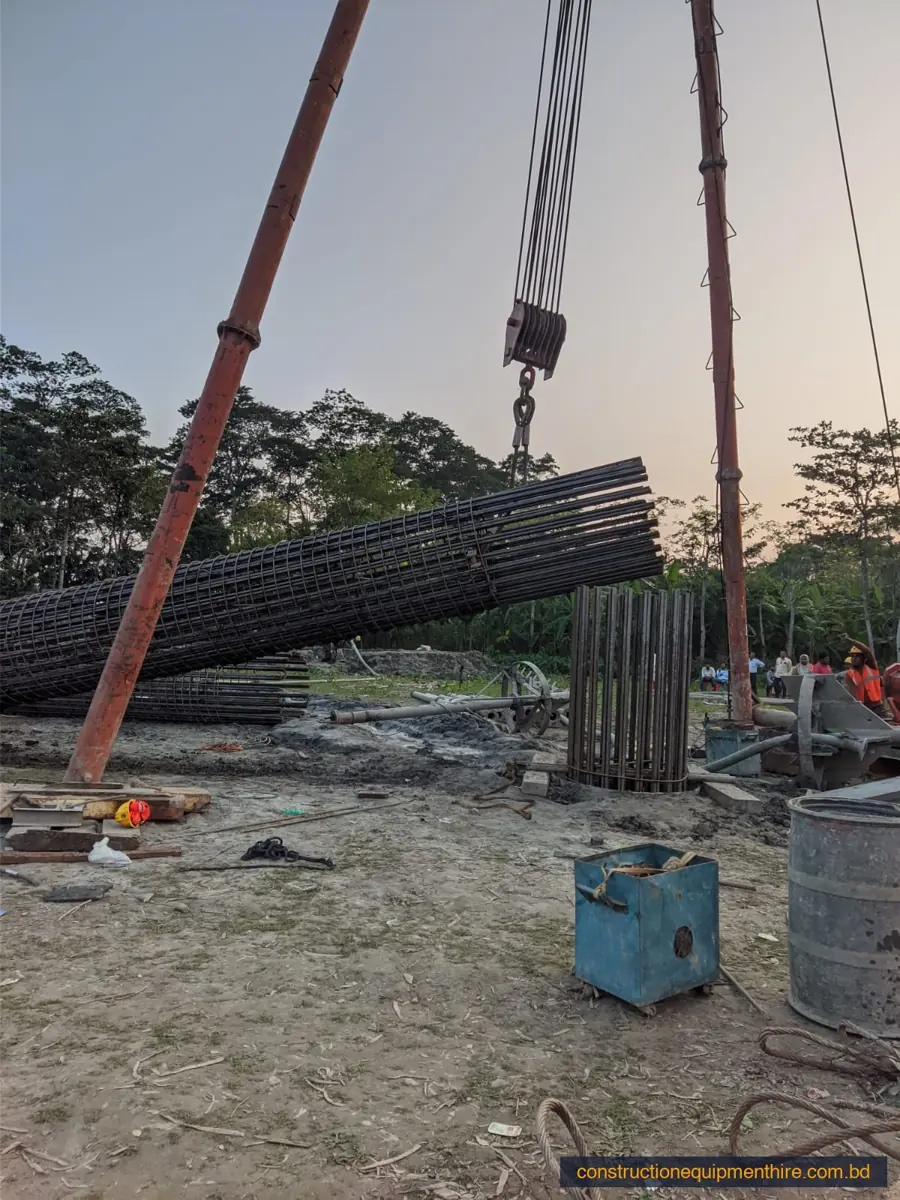
Cast in situ piling forms a concrete pile in a bored hole on site: the hole is drilled, a steel reinforcement cage is lowered in, and concrete is placed from the bottom up through a tremie pipe. Next Gen Construction carries out bored cast in situ piling across Bangladesh to BNBC, sized to the structural drawings and soil report.
কাস্ট ইন সিটু পাইলিং কী?
কাস্ট ইন সিটু পাইলিং হলো এমন একটি ফাউন্ডেশন পদ্ধতি যেখানে মাটিতে বোরিং করে গর্ত তৈরি করা হয়, তার ভেতরে রডের খাঁচা (রিবার কেজ) নামানো হয় এবং ট্রেমি পাইপ দিয়ে নিচ থেকে উপরে কংক্রিট ঢালাই করে সাইটেই পাইল তৈরি করা হয়। Next Gen Construction সারা বাংলাদেশে BNBC অনুযায়ী, স্ট্রাকচারাল ড্রয়িং ও সয়েল টেস্ট রিপোর্ট মিলিয়ে বোর্ড কাস্ট ইন সিটু পাইলিং করে।
Cast in Situ Piling Services for Heavy Structures
Cast in situ piling is a common foundation choice for high-load structures on difficult ground. Much of Bangladesh sits on soft alluvial clay and loose silty sand with a high water table, so shallow footings often cannot carry a multi-storey building, bridge pier or heavy machinery. A bored pile passes through these weak layers and transfers load to denser soil through skin friction and end bearing.
Next Gen Construction builds cast-in-place concrete piles for high-rise apartments, commercial towers, industrial sheds and infrastructure. Because the pile is formed in the ground, there are no transport limits on length and no splicing of segments. With 20+ years of experience and 500+ piling projects, we focus on clean boreholes, correctly placed reinforcement and continuous concreting, the factors that decide how well a pile carries load.
Where does your pile end underground?
Drag the slider to push the pile down and see which soil layer it reaches.
A typical Dhaka-region profile — your own soil test (SPT) report decides the real pile length.
High-Quality Cast in Situ Piling Solutions for Foundation Safety
With cast in situ piling, we drill and pour concrete directly on site, so pile depth and diameter are set to match your structural engineer's specification and the SPT values in the soil report. If the ground at a particular location turns out softer than expected, the bore can be taken deeper on the engineer's instruction instead of cutting or splicing a precast pile. Our rigs can drill beyond 50m where the design requires it.
Accuracy comes from routine checks rather than claims. We set out each pile from survey points, check casing verticality, log depth and soil changes during boring, and confirm the base level before the cage goes in. Stabilising fluid density is checked before concreting. Every pile gets a written record: diameter, depth, cage details, concrete volume and pour times.
What you get with Next Gen
Diameter and depth to design
Each pile is bored to the size and founding level in your drawings, and can go deeper if the ground differs.
High load capacity
Large-diameter bored piles carry heavy column loads through skin friction and end bearing in dense sand or stiff clay.
Low vibration
Boring instead of hammering keeps ground vibration low, which protects adjacent buildings on crowded urban plots.
Works below water table
Temporary casing and bentonite slurry hold the borehole open in saturated silt and sand common across Bangladesh.
Tested and recorded
Pile records, integrity tests and load tests as specified give your engineer evidence that the foundation meets the design.
Nationwide deployment
Our rigs, casing, tremie pipes and crews mobilise to Dhaka and every division of Bangladesh.
Our piling process, step by step
- 01
Review drawings and soil report
We study the pile layout, design loads and SPT soil report, then agree diameter, depth, rig type and testing with your structural engineer.
- 02
Set out and install casing
Pile positions are marked from survey points. A temporary steel casing guides the bore and stops loose surface soil collapsing.
- 03
Bore with stabilising fluid
The hole is drilled to founding level while bentonite or polymer slurry supports the walls. Depth and soil changes are logged as we go.
- 04
Clean base and lower rebar cage
The base is flushed of loose material and the slurry is checked. The rebar cage, with cover spacers, is lowered to the correct level.
- 05
Tremie concreting
Concrete is placed from the bottom up through a tremie pipe kept embedded in fresh concrete, displacing slurry upward until sound concrete reaches above cut-off.
- 06
Cut-off, integrity and load tests
Casing is withdrawn, pile heads are chipped to sound concrete, and integrity or load tests are carried out as the design and BNBC require.
Reliable Cast in Situ Piling Contractor for Urban Sites
Bored cast in situ piling produces far less ground vibration than hammering precast piles, which suits dense Dhaka plots where neighbouring buildings, boundary walls and utility lines sit close to the work. The main site issues are slurry management, spoil removal and truck access for concrete, and we plan these before mobilising to keep disturbance low.
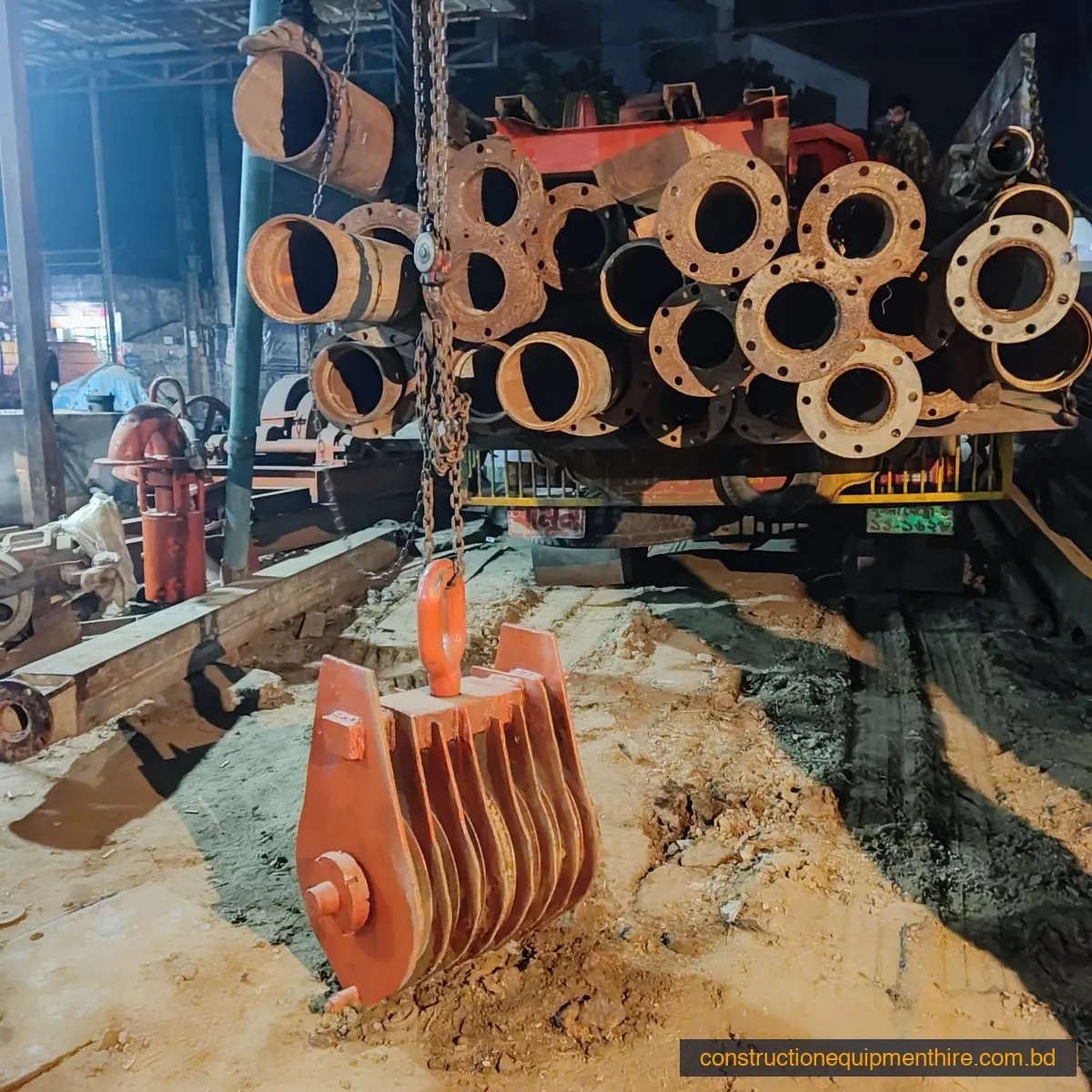
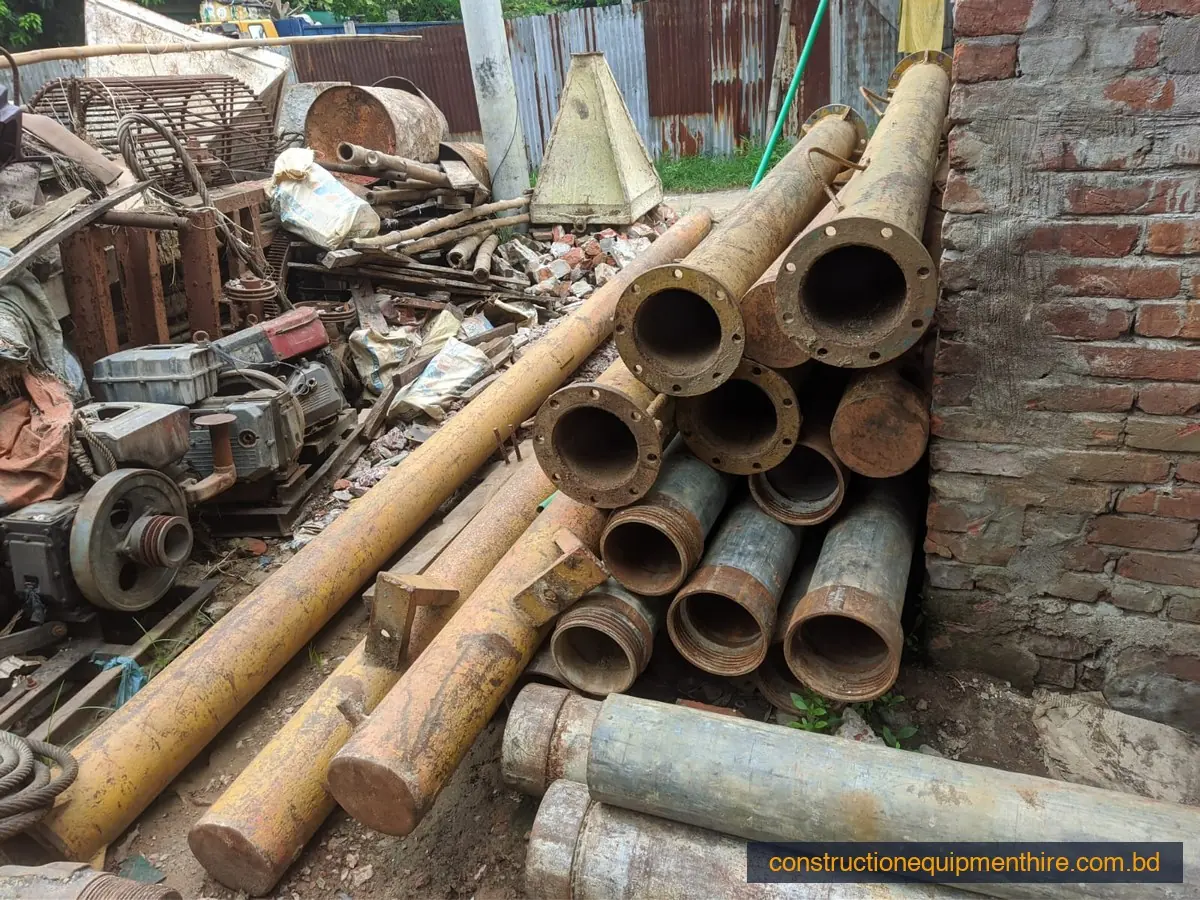
Our bored piling methods cover small-diameter piles drilled with tripod percussion rigs on tight residential plots, through to large-diameter piles drilled with hydraulic rotary rigs for bridges and towers. We follow BNBC and the project specification, coordinate integrity and load testing with your consultant, and can work night shifts where local rules allow. The aim is a foundation that performs as designed, built at a sensible cost for your site.
Which piling method fits your project?
What are you building?
Old buildings right next to the site?
Do you have a soil report?
From our own piling sites
Cast in situ bored piles vs precast driven piles
| Factor | Cast in situ bored pile | Precast driven pile |
|---|---|---|
| Length and depth | Set on site to the design, can be extended if soil differs | Fixed at casting; longer piles need splicing |
| Vibration and noise | Low, suits dense urban plots | High from hammering, can affect nearby buildings |
| Diameter range | Small to large diameter for heavy loads | Limited by section size and handling |
| Quality control focus | Borehole stability, base cleaning, tremie concreting | Concrete quality at yard, driving records |
| Site requirements | Slurry and spoil handling, concrete supply | Space for storage, lifting and pile hammer |
Questions people ask
What is cast in situ piling?
Cast in situ piling means the pile is formed in its final position. A hole is bored, a reinforcement cage is lowered in, and concrete is placed through a tremie pipe from the bottom up. Once hardened, it becomes a reinforced concrete column that carries building loads down to stronger soil through skin friction and end bearing.
What is the difference between bored piling and cast in situ piling?
In Bangladesh the terms are often used together. Bored piling describes how the hole is made, by drilling out soil. Cast in situ describes how the pile is made, by concreting it in place. A bored cast in situ pile is both. Driven cast in situ piles, where a steel tube is driven and filled with concrete, also exist but are less common here.
Why is bentonite used in cast in situ piling?
Below the water table, loose sand and soft silt can collapse into an open borehole. Bentonite slurry, or a polymer fluid, fills the hole and pushes against the walls to keep them stable during drilling and cage placement. Its density and sand content are checked before concreting, and the tremie concrete displaces it upward.
How are cast in situ piles tested?
Common tests are low-strain pile integrity tests, which check for defects such as necking or voids, and load tests, either static tests with kentledge or reaction piles, or dynamic tests. The number and type of tests are set by the design engineer and BNBC. We arrange testing with your consultant and hand over results with the pile records.
How long does cast in situ piling take?
It depends on the number of piles, their diameter and depth, soil conditions, the rig used and access for concrete trucks. Rotary rigs usually complete piles faster than tripod rigs, but small plots may only allow tripod work. After seeing your drawings and soil report we can give a realistic schedule, without fixed promises.
How much does cast in situ piling cost in Bangladesh?
The price depends on pile diameter, depth, the soil report, the number of piles and site access, as well as concrete grade and testing requirements. We do not quote fixed rates without seeing the project. Send your structural drawings and soil report and we will prepare a free quotation, usually replying within 24 hours.
Can cast in situ piling be done next to existing buildings?
Yes, this is one of its main advantages. Bored piles cause much less vibration than driven piles, so they are widely used on tight Dhaka plots with buildings on every side. We still review neighbouring structures, plan casing and slurry handling, and agree working hours to keep disturbance as low as possible.
Explore our piling services
Planning cast in situ piling for your project?
Send your structural drawings and soil report for a free consultation and quotation, usually within 24 hours.
- +880 1784-222255
- eomsbd@gmail.com
- Ta-90/4, Link Road, Middle Badda, Gulshan-1, Dhaka
- Sat–Thu 8am–6pm · 24hr emergency line